
NF PROCUREMENT GUIDE
How to Choose Hook-and-Loop Cable Ties for Reusable Cable Management
Choose hook-and-loop cable ties by bundle size, overlap, strap format and access needs. Use a practical sample checklist before ordering in bulk.
Choose hook-and-loop cable ties when cables need to be opened, rearranged and secured again. Start with the finished bundle, required overlap and access frequency, then evaluate the selected strap on the actual cables. A reusable closure does not establish a load rating, unlimited service life or suitability for every environment. This guide helps equipment buyers, cable accessory importers and assembly teams turn those requirements into a clear bulk-order specification.
Key Takeaways
- Measure the finished bundle and reserve enough usable fastening overlap for the selected strap.
- Choose individual straps or cut-to-length rolls around the installation and replacement process.
- Verify repeated opening, cable-jacket contact and closure behavior on representative samples.
- Keep environmental ratings, mounting requirements and load claims separate from the general material name.
When Are Reusable Hook-and-Loop Ties a Good Fit?
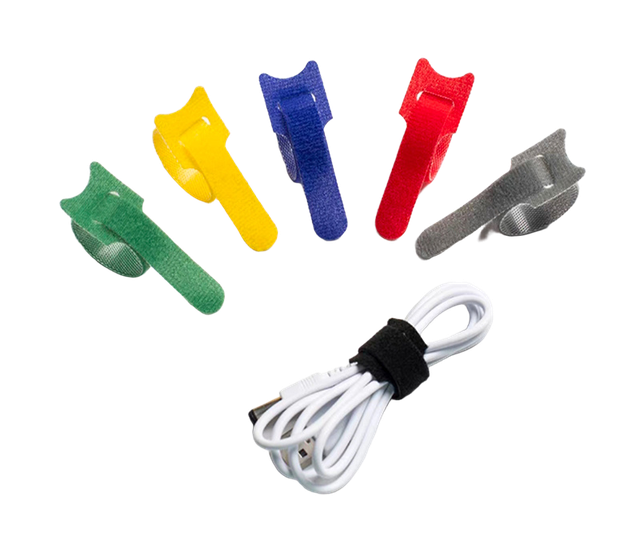
Hook-and-loop straps are worth evaluating for equipment leads, desk wiring, accessory kits and cable groups that change during servicing. The useful feature is controlled reopening: an operator can release the closure, add or remove a cable, and refasten the strap. That workflow differs from an ordinary non-releasable ratchet tie that must be cut during removal.
Think through the maintenance task before choosing the fastener. A technician replacing one lead needs access to the right section of the bundle. A packing operator securing a coiled power cord needs a closure that is quick to apply and easy for the customer to remove. Neither task automatically requires a structural hanging strap or a permanent panel attachment.
The hook-and-loop cable tie range lists nylon and polyester options in individual straps and rolls. The catalog establishes those available families; it does not assign every material, end shape or dimension to every configuration. Confirm the quoted construction before approving a sample.
Individual Straps or Continuous Rolls?
Choose the supply format around repeatability and the range of bundle sizes. Individual straps give operators a defined part to pick. Rolls allow cutting around varying requirements, but the buyer must also define the cutting and inspection process. Include waste and preparation time when comparing purchase prices.
| Decision | Individual straps | Continuous rolls |
|---|---|---|
| Repeated assembly | A fixed approved length supports consistent picking | Define a repeatable cutting method and target length |
| Variable bundles | Stock the strap sizes needed for the approved range | Cut lengths to suit the measured bundles |
| Cable attachment | Confirm the slot, end shape or other retention feature | Do not assume a cut strip has a captive attachment |
| Purchasing control | Count pieces and separate size or color variants | Specify usable roll length, width and allowed joins |
How Do You Size a Strap and Its Overlap?
Measure the assembled bundle where the tie will actually sit. Include irregular cable arrangements and the largest expected combination of leads. The circumference of a circular bundle can be estimated as pi multiplied by its diameter, but an oval or loosely arranged bundle is better checked directly with a flexible measure or trial strip.
Overall strap length and usable fastening length are different. The strap needs to travel around the bundle and leave an engaging area after accounting for any slot, neck or non-fastening end. Ask the supplier for the required overlap for that construction and your application. Do not turn one manufacturer's overlap instruction into a universal minimum.
For example, the manufacturer instructions for VELCRO Brand continuous tape specify overlap for that named product. That illustrates why overlap belongs in an installation instruction; it does not establish a requirement or rating for another supplier's strap.
Check both ends of your intended bundle range. At the largest bundle, confirm adequate engagement and handling space. At the smallest bundle, check whether the excess tail looks acceptable or catches adjacent parts. Record the accepted length, width and closure position with a photograph of the approved assembly.
Specify Closure Design, Width and Cable Contact Together
Check how the strap remains with the cable when opened. Some designs use a slot to form an attachment loop; others are simply removable strips. The VELCRO Brand pre-cut tie instructions show a slotted head and self-engaging closure for that particular product. Use a drawing or sample to identify the arrangement you want instead of assuming every reusable tie has it.
Choose width alongside routing clearance, cable contact and closure behavior. A wider strap occupies more space and changes the contact area; it does not establish a usable holding capacity on its own. Test the proposed width rather than substituting a width-based strength assumption for application evidence.
Install the sample snugly enough to organize the cables without visibly deforming them. Inspect soft jackets and finished surfaces after the agreed installation and storage period. Where a cable manufacturer specifies a bend radius or fastening method, preserve those requirements in the assembly instruction. The strap is one part of the cable-management design.
Need help specifying the part?
Send the dimensions, application and expected quantity. Our team will confirm the configuration and quotation terms.
Send Your Requirements ↗Send a Sample Brief Before Comparing Bulk Prices
An equipment photograph, bundle-size range and description of the reopening task give a supplier more useful information than a request for a generic reusable tie. Add preferred width, length, color and strap or roll format. Flag unusual exposure or documentation requirements at the beginning.
Send your cable-management requirements to request a specification discussion. Include a drawing of the end or slot if the tie needs to remain attached to a single lead. Keep the proposed sample revision identifiable so your purchasing and assembly teams evaluate the same part.
A Proposed Sample Check for Repeated Access
Evaluate a representative assembly before committing to the bulk order. The following is a proposed buyer test plan, not a report of completed factory testing. Define the number of samples, opening cycles and acceptance conditions with the responsible team before the trial.
Use the normal operators and installation instructions. Check that the closure is accessible, the overlap is consistent and the cables remain arranged after the agreed handling sequence. If a tail can be lifted accidentally during packing or servicing, record the event and reconsider the end position or design.
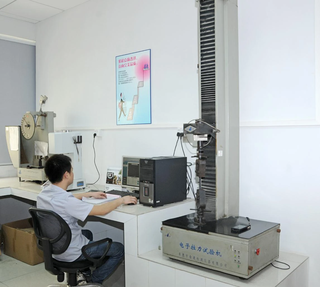
For repeat-access applications, open and refasten samples through the agreed cycles. Note changes in engagement, loose fibers, visible contamination and cable-jacket condition. Do not infer an unlimited reuse claim from a small trial. If a force measurement matters, agree on its direction, fixture and method so the result can be interpreted consistently.
- Identify sample construction, dimensions, color and revision.
- Trial the smallest and largest approved cable groups.
- Check access, engagement and appearance before and after handling.
- Record reopening behavior under the defined cycle plan.
- Inspect the strap, cable jacket and finished equipment for unacceptable marks or damage.
Which Material and Environmental Details Need Confirmation?
Nylon or polyester identifies a material family, not a complete service specification. Ask which components use each material and what grade is quoted. Provide temperature conditions, sunlight exposure, cleaning agents and expected contamination when those factors apply to the installation.
A black strap is not proof of UV resistance. A fabric construction is not proof of a flame rating. For installations with particular fire, electrical or other compliance requirements, request documentation tied to the selected part and its intended use. Leave the requirement unresolved until the responsible technical team has reviewed the evidence.
Keep bundling and mounting decisions separate. A strap wrapped around a cable group does not itself identify how that group attaches to a panel. Discuss a suitable mounting arrangement when the assembly requires fixed routing, and confirm the complete installation rather than treating any reusable closure as a rated support.
What Belongs in a Bulk Hook-and-Loop Tie RFQ?
Define the order by SKU and approved drawing or sample. Specify finished dimensions and tolerances, end shape, color reference, construction, pack quantity and labeling. For rolls, include usable length, allowed joins and how the product should be wound and packed. Confirm availability and commercial terms through the quotation.
Compare quotations on accepted usable output. Pre-cut straps may remove a preparation step, while rolls may reduce the number of stocked lengths. Include operator preparation, scrap and packing needs in that decision without assuming either format is always cheaper. The custom manufacturing page explains the information needed for a specification discussion.
Retain an approved reference and record how substitutions are handled. A later change in material, profile or closure design deserves review against the same application checks. Photos help identify the part, but the order should not rely on photography alone to control dimensions or performance.
Choose Around Access, Fit and a Repeatable Specification
The useful reusable tie is the one that fits the bundle and supports the actual reopening task. Measure the assembly, confirm the fastening overlap and end design, and evaluate a documented sample before bulk purchasing. Keep claims about environment and holding performance tied to the selected part.
Contact the team about a reusable strap specification with your bundle dimensions, application photograph, quantity and preferred format. That gives the sample and quotation discussion a clear starting point.
Frequently Asked Questions
How much overlap does a hook-and-loop cable tie need?
Use the overlap requirement for the selected strap and application. Overall length must also account for the bundle circumference and any non-fastening end or slot. Confirm the largest intended bundle with samples rather than applying one product's published overlap to every tie.
Are hook-and-loop cable ties the same as VELCRO Brand ties?
Hook-and-loop describes the fastening system. VELCRO is a brand name for specific products. Specify the supplier, material, dimensions and closure construction when purchasing so a generic description does not imply a branded product or its published ratings.
Can reusable fabric ties replace nylon cable ties everywhere?
No. Compare the installation, access frequency, mounting arrangement and required documentation. A reusable cable-management strap should not inherit a nylon tie's specified strength or a separate support component's load rating.
How many times can a hook-and-loop tie be reused?
There is no single cycle count for every construction and environment. Request product-specific evidence when a service-life requirement matters, and agree on a representative opening-and-refastening test before approving the part.
Information sources and scope
This guide combines NF catalog information with product-specific references. Other manufacturers’ examples describe their own products and do not establish an NF rating. Final dimensions, material grade and acceptance requirements must match the quoted configuration.
- NF product catalog, hook-and-loop cable ties, page 18 — NF catalog page 18: nylon and polyester options, individual straps and rolls. Exact configuration and grade are confirmed in the quotation.
- VELCRO Brand ONE-WRAP Ties — product and application instructions — Manufacturer describes pre-cut reusable ties, a slotted head and self-engaging application for its named product. Used to explain the need to specify closure geometry, not as NF performance evidence.
- VELCRO Brand ONE-WRAP Continuous Tape — application instructions — Manufacturer gives product-specific overlap and indoor-use instructions. Guide deliberately avoids applying its numeric overlap or suitability to another strap.
Explore the products
Discuss your next order
Share your specification, sample needs and destination. MOQ, lead time and documentation are confirmed in the quotation.
Get a Quote ↗