

NF PROCUREMENT GUIDE
Silicone vs PVC Tubing: A B2B Specification Guide
Compare silicone and PVC tubing by application, ID, OD, wall thickness and documentation. Prepare a precise sample request and procurement specification.
Choose silicone or PVC tubing by the selected compound, dimensions and application conditions. The material name alone does not establish an operating temperature, pressure limit, electrical rating or regulated-use grade. For procurement, the first useful decision is whether the tube is covering an assembly or carrying a medium, followed by the exact size and evidence that the application requires. This guide explains how to compare quotations without importing another manufacturer's ratings into your own order.
Key Takeaways
- Define whether the tube is protective covering or part of a fluid, pressure or other engineered system.
- Specify inner diameter, outer diameter and wall thickness consistently, with tolerances and units.
- Compare the exact compounds, construction and hardness rather than relying on silicone or PVC as a complete grade.
- Request application-specific documentation and evaluate samples on the actual assembly before production approval.
Start With the Function of the Tube
A tube placed over a wire bundle and a tube carrying a liquid can look similar while serving different purposes. For covering, the buyer needs installation clearance, routing behavior and compatibility with adjacent components. For conveying a medium, the review also needs that medium, flow requirements, connections and any pressure or vacuum conditions.
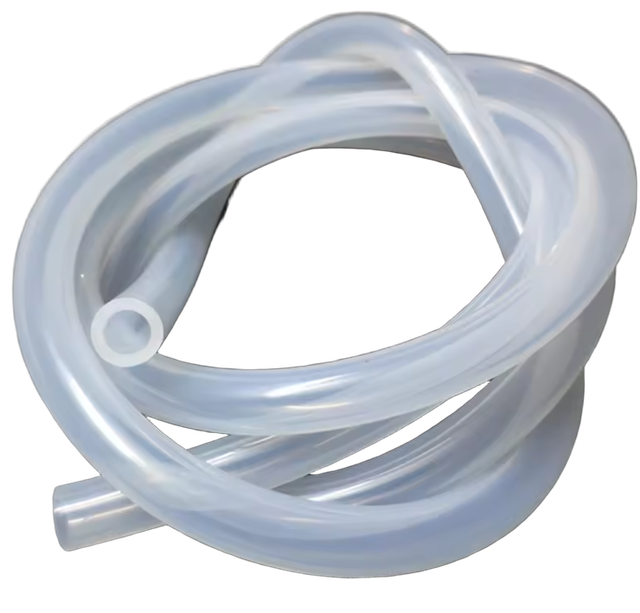
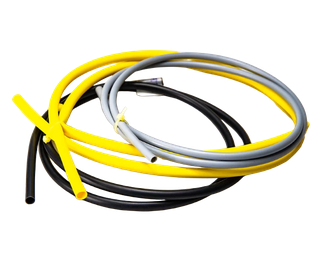
The PVC tubing range is described for routing and covering wires in appliances and electronic assemblies. The silicone tubing range is described for customer-specified tubing and assembly requirements subject to grade confirmation. Those descriptions do not establish a pressure-hose, medical or food-contact qualification.
Write the intended function in the RFQ. If the application involves fluid contact, electrical insulation performance or another controlled requirement, identify it explicitly so the supplier can review the selected part and documentation. Do not approve a new duty from a generic product photograph.
What Do ID, OD and Wall Thickness Mean?
ID is the inner diameter, OD is the outer diameter, and wall thickness is the material between the two surfaces. For a concentric circular tube, nominal wall thickness equals (OD − ID) ÷ 2. This is a geometric relationship, not a pressure-rating calculation.
For example, a listed silicone tube with an 8 mm ID and 10 mm OD has a nominal 1 mm wall. The current supplier data also lists 9 mm ID × 10 mm OD with a 0.5 mm wall. Both examples share the same nominal OD, but the internal space differs. They are selected dimensional examples, not a complete available-size chart.
Use units every time and label the order of dimensions. A request for 8 × 10 tubing is less clear than ID 8 mm, OD 10 mm, nominal wall 1 mm. When a drawing already defines ID and OD with tolerances, check that the wall requirement can be met consistently rather than adding an incompatible third limit.
Agree how soft tubing will be measured, including the condition of the sample and the method used to avoid unintended compression. If wall uniformity, ovality or a particular critical dimension matters, put that requirement on the drawing. A nominal size pair does not describe all geometric acceptance conditions.
Silicone and PVC: Compare the Quoted Products
A useful comparison records the properties each candidate must demonstrate instead of assigning universal winners by polymer name. NewAge Industries' separate silicone tubing catalog and PVC tubing catalog publish specifications by named product and construction. Their data are examples of product-specific documentation, not ratings for the tubing offered here.
Request the exact compound or grade designation where it is relevant, along with hardness and construction. A color or transparent appearance does not identify all ingredients or establish compliance. Also separate a round tube from a custom extrusion profile: a shaped profile photograph is not a dimensional drawing for circular tubing.
| Selection factor | Silicone candidate | PVC candidate |
|---|---|---|
| Material identity | Confirm selected silicone compound, grade and relevant process details | Confirm selected PVC compound and relevant formulation requirements |
| Geometry | Agree ID, OD, wall, tolerance and round or profile construction | Agree ID, OD, wall, tolerance and supply configuration |
| Handling | Evaluate the actual hardness, bend and installation behavior | Evaluate the actual hardness, bend and installation behavior |
| Service conditions | Request evidence for the selected part under specified conditions | Request evidence for the selected part under specified conditions |
| Regulated use | Documentation must identify the intended product and use | Documentation must identify the intended product and use |
Check Installation Clearance, Bends and Connections
For protective covering, measure the component that must pass through the tube during assembly. A connector can determine the required clearance even when the cable itself is much smaller. Confirm whether tubing is installed before termination, after termination or over a partially assembled harness.
Route a proposed sample through the actual space. Check bends, nearby edges, contact surfaces and any moving components. Record kinking, flattening or interference under the intended installation condition. Do not transfer a bend-radius number from a different size, hardness or construction.
For a tube connected to a fitting, provide the fitting drawing and attachment method. The NewAge silicone catalog cautions about sharp barbs and unlined clamps for its named products. That is a useful reason to evaluate the connection as an assembly; it does not establish a fitting or clamp specification for another tube.
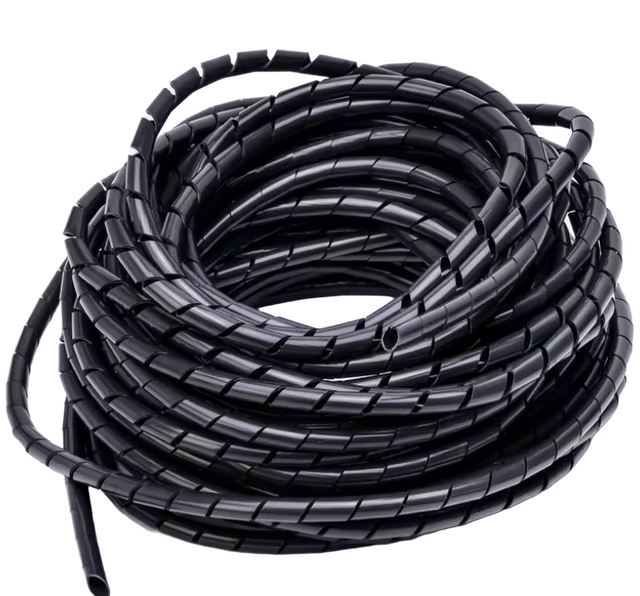
If a covering application needs frequent branch-outs, consider whether a closed tube is the right geometry. The spiral cable wrap range is a separate option for grouped cables with branch-outs. It serves a different construction need and should not be treated as a fluid-carrying substitute.
Need help specifying the part?
Send the dimensions, application and expected quantity. Our team will confirm the configuration and quotation terms.
Send Your Requirements ↗Prepare an Application-Specific Tubing Request
Send the ID, OD, required length and application before asking which material is better. Add a drawing, installation sequence and the operating conditions. Identify any evidence you require and distinguish a preferred material from a mandatory grade.
Send your tubing specification with those details to discuss suitable sample options. If the existing part has an approved datasheet or reference sample, include its identification so the replacement discussion stays tied to the original requirement.
Which Service Conditions Must the Supplier Review?
Describe minimum and maximum operating conditions, any short excursions and how long exposure lasts. State whether a value applies during installation, continuous operation, storage or cleaning. A maximum material property does not automatically describe the complete assembly's service limit.
For contact with oils, cleaning chemicals or other media, identify the substances and relevant conditions rather than saying chemical-resistant. If pressure or vacuum is involved, provide the duty and request a documented assessment for the complete configuration. A wall dimension alone does not provide an acceptable pressure rating.
For electrical covering, specify the insulation, flame or other performance requirement that the design actually needs. For regulated contact, specify the intended use and destination requirements. Do not assume that all silicone is medical-grade, that all PVC is prohibited for a particular category, or that a transparent tube is food-grade.
The referenced manufacturer catalogs distinguish product data and application testing, reinforcing the need to evaluate the selected part. Keep any certificate, declaration or test report linked to its product identity, scope and revision. A document for another brand or compound is not evidence for this order.
A Proposed Sample Approval Plan
Use the actual assembly and define acceptance before the trial. The steps here are a proposed procurement plan, not a claim of completed supplier testing. Sample checks should address the intended function and be reviewed by the responsible technical team where the application requires it.
First identify the sample, material, dimensional revision and supplied format. Measure the critical geometry with the agreed method. Check cut length, end condition and visible contamination or damage against your acceptance specification.
Next install the tube using the normal sequence and tools. Confirm clearance, routing, retention and contact with adjacent surfaces. Where the design has a connection, evaluate the fitting and attachment together. Record deviations and the conditions used so a later repeat test has a meaningful reference.
Only then arrange any necessary application-specific tests under an agreed procedure. A sample that slides onto a connector has passed a fit observation, not a pressure, aging or compliance test. Keep the conclusions as narrow as the evidence obtained.
Control Cut Length, Roll Packing and Repeat Orders
Specify whether the order needs measured cut lengths or rolls, with tolerances and usable quantity. Discuss end finish where it affects assembly. Confirm availability and pricing for the chosen format instead of inferring standard cutting services from a different material's listing.
Agree on winding, coil dimensions and packaging that suit the receiving and installation process. If storage shape or temporary flattening matters to fit, include that issue in sample review. Identify lots and separate sizes so the assembly team can distinguish similar-looking tubes.
Keep the approved drawing and sample revision with the purchase order. List the material or grade, hardness where specified, dimensions, length, color, packing and required documents. Ask for material or construction substitutions to be disclosed before approval. This control makes repeat purchasing more reliable than matching a photograph.
Choose a Documented Tubing Specification
The silicone-versus-PVC decision becomes useful when it refers to a particular job and a particular part. Define the function, keep ID, OD and wall requirements consistent, and evaluate the selected grade on the intended assembly. Let supporting documents and application checks establish the claims that matter.
Contact the team for a tubing quotation with your dimensioned drawing, application, quantity and destination. Include any existing specification or mandatory documentation so sample selection can address the actual procurement requirement.
Frequently Asked Questions
Is silicone tubing always better than PVC tubing?
No. Compare the exact compounds, dimensions, hardness, intended function and supporting documentation. A polymer name alone does not establish the service limits or suitability of the selected tube.
How do I calculate tubing wall thickness from ID and OD?
For a concentric circular tube, nominal wall thickness is (OD minus ID) divided by two. An 8 mm ID and 10 mm OD therefore gives a nominal 1 mm wall. Manufacturing tolerances and wall uniformity still need agreement.
Can I choose a pressure rating from wall thickness alone?
No. Pressure suitability depends on the selected material, construction, size, conditions and complete assembly. Request product-specific evidence and an agreed application assessment rather than assigning a rating from dimensions alone.
Does a silicone or transparent PVC tube automatically qualify for food or medical use?
No. Such uses require a review of the selected grade, product identity, intended contact conditions and applicable documentation. General material descriptions, transparency and another supplier's certificate are insufficient evidence for the order.
Information sources and scope
This guide combines NF catalog information with product-specific references. Other manufacturers’ examples describe their own products and do not establish an NF rating. Final dimensions, material grade and acceptance requirements must match the quoted configuration.
- NF PVC and silicone tubing catalog, pages 21–22 — NF catalog pages 21–22 and selected tubing configurations: material families and dimensions, subject to confirmation for the intended application.
- NF silicone tubing — selected dimensional examples — NF catalog pages 21–22 and selected tubing configurations: material families and dimensions, subject to confirmation for the intended application.
- NewAge Industries — Silicone Tubing and Hose Catalog — Primary manufacturer catalog distinguishes named products and construction, notes typical-property limitations and recommends application testing; SILCON fitting/clamp caution supports assembly-level review only. No NF rating inferred.
- NewAge Industries — PVC Tubing and Hose Catalog — Primary manufacturer catalog lists size-specific ID/OD/wall and working conditions for named PVC products. Used for documentation structure and application-specific selection, not as a source of NF performance ratings.
Explore the products
Discuss your next order
Share your specification, sample needs and destination. MOQ, lead time and documentation are confirmed in the quotation.
Get a Quote ↗